
A small studio that published itself
Tembo Entertainment was an independent mobile games developer and publisher based in Dhaka, Bangladesh. Its own description of what it made was three words: “Quality Casual Games”. It built every title in a no-code engine, released four of them in six months under its own name, and went looking for partners rather than waiting to be found.
The studio
One small team, both halves of the job
Tembo Entertainment described itself simply: a mobile game developer and publisher. It was not a work-for-hire studio building other people's games, and it was not a publisher buying other people's work. It made its own titles and shipped them itself.
Its own website said where it was: “Tembo Entertainment is an Indie Game Development Company located in Dhaka, Bangladesh.” It also described how it thought about the work — a “talented creative team” looking at “user's choices carefully”, with the stated intention “to keep its users entertained with every game they publish for all major platforms”.
The evidence for the size of the operation is indirect but consistent. The studio announced its releases on a game engine's community forum rather than through a press office. Its website was a four-page WordPress site — Home, Games, About, Contact — with the games listed as tiles and no more than a paragraph of copy on any page. Its four titles share one input, one progression model and one art style: the signature of a very small team reusing what it had already learned rather than running several production lines at once.
What it did not have was a marketing budget. Asked in July 2016 whether the first game had been taken to publishers, the developer answered plainly: “We didn't go for a publisher. We are trying to learn some basics about the whole process.” Three months later the studio added a line to the Clone Rush announcement saying it was open to buyers, publishers and partnerships — the same position, approached from the other side.
Names for the company vary slightly across the few records that survive. Its Twitter account is styled “Tembo Inc. — a Game Development Company”; its Facebook page is called “Tembo Entertainment Creations”; the games and the domain use Tembo Entertainment. This site uses the last of those, because that is the name the studio put on its own releases.
How it was built
No code, no engine team, no delay
Every documented title was built with Buildbox, a drag-and-drop engine for mobile games, and announced on that engine's own community forum. For a studio of this size that was the enabling decision: it removed the need for a programming team, and it meant a game could go from idea to store submission without an engine ever being written from scratch.
-
Pick the engine
Buildbox, chosen because it turns the two things these games need most — collision and a single input — into settings rather than code.
-
Design one loop
One tap, endless, escalating. The whole design lives in how the difficulty curve is tuned, not in how many levels exist.
-
Build the reward layer
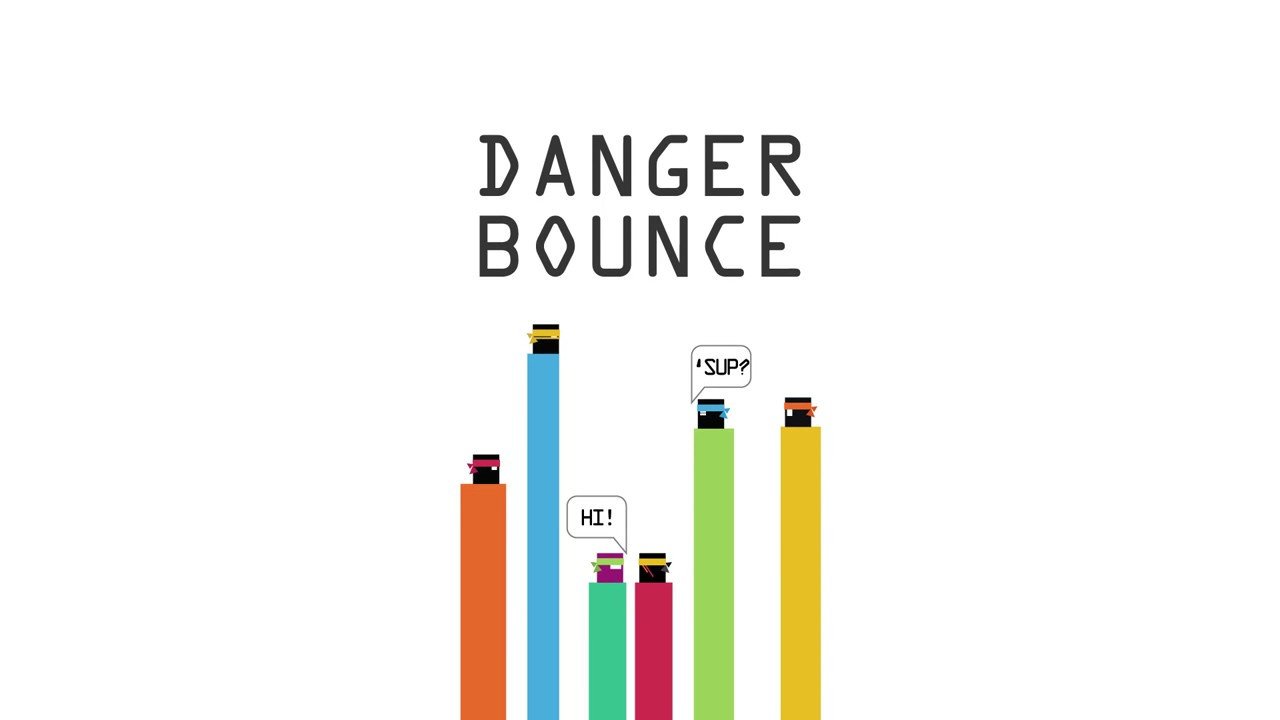
Coins in Clone Rush unlock 21 characters, brothers in Danger Bounce unlock a ninja family, and LEDs lit in Wire Switch unlock electrons.
-
Harden it
Difficulty is not hidden. “Warning: This game is hard” shipped inside the Danger Bounce announcement itself.
-
Ship it yourself
Straight to the App Store and Google Play under the studio's own developer name, with no publisher in between.
-
Keep a shelf of half-finished games
When a release performed “moderately”, the studio reached for an unfinished project and finished it in under a week. That is how Wire Switch came to exist.
Why this mattered. A no-code engine let a team with no visible engineering footprint keep a release cadence — four titles documented within six months in 2016 — and still ship to two stores, on two platforms, with one developer doing the posting.
The business model
Self-published, and open to being published
The most commercially explicit line in the studio's surviving writing came at the end of the Clone Rush announcement in October 2016: the studio was “also open for buyers and publishers/partnership”. Three months earlier it had said it had not gone to a publisher at all.
Own the release
Tembo Entertainment published its own titles under its own name — the games carry the studio's branding, not a third party's, and the developer accounts that published them were the studio's own.
Invite the deal
Rather than hold out for a publisher to approach it, the studio said publicly that it was open to being bought from, published by or partnered with.
Build a catalogue
Four games in one engine, sharing one input and one reward structure, is a portfolio built for acquisition rather than a single bet on one title.
Read that as history, not as an offer. The statement dates from October 2016 and describes the studio's position at that time. This site is not the studio, does not represent it, and cannot act on anything in that sentence.
What the studio published
A small website, and a channel that outlived it
Two things carried the studio's own voice: a four-page WordPress site, and a YouTube channel. The website is gone — its domain was a parking page by September 2017 — but four of its pages survive in web archives, and the channel is still up with every trailer the studio ever made.
- SiteWordPress 4.6.1, four pages
- PagesHome · Games · About · Contact
- Tagline“Quality Casual Games”
- Location15 New Baily Road, Dhaka-1000, Bangladesh
- Contact publishedtembo.entertainment@gmail.com
- Archived pagesHome, Games, About, Contact and a Danger Bounce press kit
- YouTube channel@temboentertainment7498 — four trailers, still live
The address, phone number and email above are the studio's own published business details, reproduced here as a historical record. They are not verified as still active, and nobody should use them expecting a reply from this studio.
Timeline
What is documented, and when
Every dated entry below comes from a primary source — the studio's own release posts, the stores they point to, or the public profile of the account that posted them. Nothing here is inferred from a secondary summary.
-
26 April 2016
The developer account appears
The forum account that would publish every Tembo Entertainment release joins Buildbox's community. Its first game announcement follows two and a half months later.
-
14 July 2016
Hue Run released
“Our very first Buildbox game.” Launched on the App Store and Google Play the same day, with a trailer, three screenshots, and a closing line linking the studio's own social accounts. No publisher involved, by the developer's own account.
-
6 October 2016
Clone Rush released
The first release to carry the studio's name in its title. Announced with four images — the only original studio artwork that survives — and a four-line feature list. The same post invites buyers, publishers and partners.
-
13 December 2016
Danger Bounce released
“Developed and published by us Tembo Entertainment. It's our third game.” Shipped on iOS and Android, with eight brothers to free and the warning that the game is hard printed in the announcement.
-
22 December 2016
Hue Run is cloned
The developer reports that the first game has been “exactly cloned or reverse engineered by someone”, that the copy's store buttons still point at the original's pages, and that its publisher account uses a name derived from the studio's. The studio gives it three days and then reports it.
-
27 December 2016
Wire Switch released
Two weeks after Danger Bounce. “With a moderate success with Danger Bounce, we decided to finish an untouched game, real quick… Finished and published it under a week and also got some nice reviews.”
-
31 March 2017
Featured in the UK App Store
A forum member recognises Danger Bounce in the UK store's “More Games You Might Like” section and posts to congratulate the studio — the first documented platform promotion any of the games received.
-
23 June 2017
Tumble Ranger released
A sixth game — 120 levels, ten characters, achievements — announced from the same account, but without the studio's name in the post. Two weeks later the developer reports that Apple has featured it in the Action category in France.
-
13–21 December 2016
Four trailers go up
Danger Bounce on the 13th, Hue Run and Wire Switch on the 19th, Clone Rush on the 21st. All four still play on the studio's own YouTube channel — the only moving images of these games that exist.
-
5 October 2017
The forum account goes quiet
The last recorded activity on the account that published the whole catalogue. No further release, update announcement or studio statement after this point could be found in any accessible source.
-
By 11 September 2017
The website becomes a parking page
An archived capture from this date shows the studio's domain serving a registrar's parked placeholder rather than its own site — a single frame pointing at a domain-parking service. The last capture of a real page, a Danger Bounce press kit, is from 18 July 2017, so the site came down between those two dates.
-
After that
Everything else comes down
Every title was delisted at some point after release — all five store records now return no result. A forum member was already unable to find Clone Rush in their country's store in August 2018. The YouTube channel, unusually, was never taken down.
The gap is the story. A studio that released four games in six months and then stopped leaving traces is not unusual for mobile in 2016 — but it does mean most of what this site can say is about the games, not about the company.
Status
What is known, what is not, and what this site is
This is an independent reconstruction built from the studio's own published material. It is not an official site, and the studio has not been contacted, endorsed or involved in any way.
- Is the studio still operating?Unknown
- Can the games be downloaded?No — all five are delisted
- Is the studio website live?No — parked by September 2017
- Do the studio's trailers survive?Yes — all four, on the studio's YouTube channel
- Do the social accounts exist?Twitter and Facebook do; their posts are login-walled
- Is this an official site?No
- Where every claim comes fromDocumented in the README and on the credits page
Nothing on this site is a current offer, an invitation to invest, or a claim that any product is for sale or supported. Where a fact could not be verified, the page says so rather than filling the gap.
Why this reconstruction exists
The games are gone from the stores, the site is gone from the web, and the only original artwork that survives is four thumbnails from a single forum post. A studio that shipped four finished games in six months leaves almost nothing behind — and that is exactly the kind of work that disappears by default.
This site gathers what could be verified, credits every image it borrows, and marks the boundary between the two.
What would improve it
- Full-resolution screenshots, or any trailer
- The original logo, icon or any brand asset
- The names of the people who made the games
- Anything released by the studio under a different name
Questions
About the studio
See the sources and the media
Every photograph on this site, who took it, and under what licence — plus the full credit list for the video.